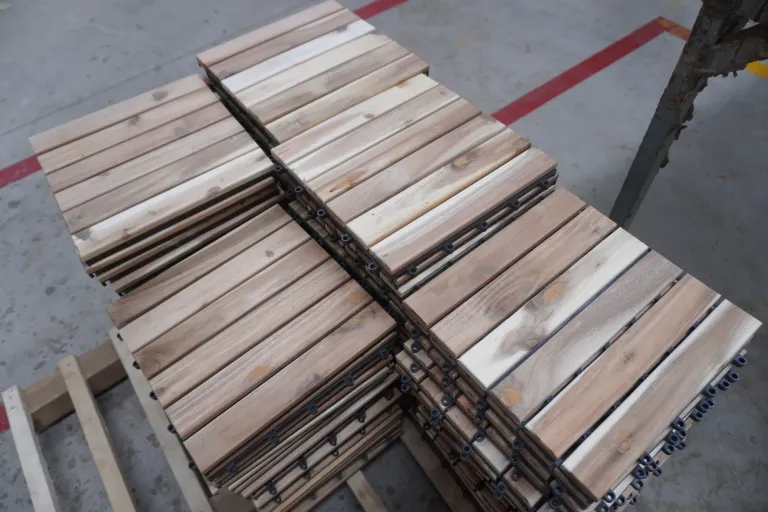
Acacia vs teak outdoor furniture is the question buyers ask most often when they plan a garden or patio range. Teak is the traditional premium choice; plantation acacia has become the mainstream alternative because it looks good, performs well when it is made properly and costs less. This guide compares the two woods the way an importer needs to: weather resistance, maintenance, appearance, cost and supply, and where each one belongs in a range.
Acacia vs teak at a glance
| Factor | Teak | Plantation acacia |
|---|---|---|
| Natural weather resistance | Very high: rich in natural oils | Good when well dried, well jointed and finished |
| Maintenance | Can be left to weather to a silver-grey with little loss of strength | Benefits from regular oiling or staining |
| Appearance | Golden brown, fine and fairly even grain | Warm honey to brown, livelier and more varied grain |
| Cost | Generally higher: teak matures slowly | Generally lower: fast-growing plantation species |
| Supply | Price and grade vary widely by source | Steady supply from plantations |
| Density | Dense hardwood | Dense hardwood |
| Typical position in a range | Premium and hospitality | Mainstream to mid-range retail |
Weather resistance and maintenance
Teak’s natural oils make it the most forgiving outdoor wood: it tolerates sun, rain and neglect better than almost any other timber. Acacia is also a dense hardwood and performs well outdoors, but it does not have the same oil content, so its life depends more on drying, joinery, hardware and finish. A well-made, oiled acacia set that is cleaned and re-oiled regularly serves well; an untreated one left wet will deteriorate sooner. Our guide Is acacia wood good for outdoor furniture? explains the factors and the care routine.
Appearance and positioning
Teak is known for its golden-brown colour and quiet, even grain, which reads as premium. Acacia has more grain character, from pale honey to darker streaks, and takes stain well. A teak-tone stain on acacia gives a similar colour at a lower price, which is why many retail ranges use it. If your customers expect a particular look, agree the colour on a sample rather than by species name.
Cost and supply
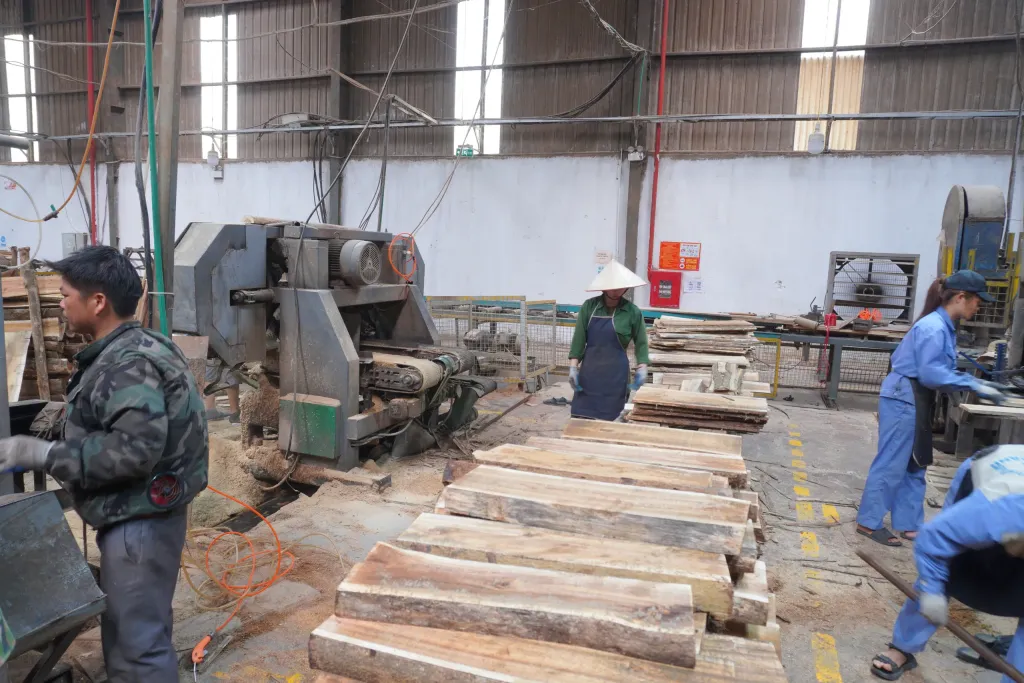
Teak takes many years to mature, which keeps prices high and makes grade and origin an important part of any teak quotation. Plantation acacia grows faster and is supplied steadily. For a retailer, that usually means acacia can hold a lower shelf price or leave more margin for the same quality of workmanship. Price reflects the wood, not the workmanship: a well-made acacia set is better than a badly made teak one.
How each wood ages outdoors
Left untreated, teak gradually weathers to a silver-grey that many customers like, with little loss of strength. Acacia also greys without a finish, but it is more prone to surface checks and to moisture problems at the joints if it is neglected. With an oiled or stained finish that is renewed each season, acacia keeps its warm colour for much longer. For a retailer the practical difference is the message on the care label: teak can say “optional oiling”, acacia should say “oil at the start of each season”.
Sustainability and certification
Both woods can be grown on plantations, and the certification and origin differ from one supplier to another, so ask for evidence rather than relying on the species name. Our acacia comes from our own plantations and we do not harvest natural forest. FSC® 100% is available on request for our acacia products: our Chain of Custody certificate SA-COC-016121 (licence FSC-C226314) covers plantation Acacia mangium and hybrid, and you can check it in the FSC public certificate search. Read the importer checklist for FSC 100% Chain of Custody to see what else to verify on any supplier, whatever the wood.
Questions to ask a supplier quoting either wood
- What is the moisture content at dispatch, and how is it measured?
- How are joints made, and what hardware is used on folding parts?
- Which finish is applied, and can I approve it on a production-line sample?
- Which grade is used on visible and hidden parts?
- How are cartons packed and labelled for my route and market?
Comparing these answers tells you more about the durability of a set than the species name does.
When teak makes sense
- Premium, hospitality and marine-style ranges where very low maintenance is part of the promise.
- Furniture that will stay outdoors year-round in harsh conditions with little care.
- Markets where teak is what the customer asks for by name.
When acacia makes sense
- Mainstream and mid-range garden, patio and balcony ranges where price and appearance matter.
- Folding and knock-down pieces that are stored over winter.
- Programmes that need steady supply and plantation sourcing: our acacia comes from our own plantations, and FSC® 100% is available on request.
Other woods buyers ask about
- Eucalyptus: another plantation hardwood in a similar price band, with its own colour and finishing behaviour; compare by sample.
- Cedar: lighter and softer, naturally resistant to weather but more easily dented.
- Pine: a softwood that normally needs preservative treatment for outdoor use and is less durable outdoors.
- Aluminium: very low maintenance with a different look and feel; often combined with wood.
How to choose for your range
Specify performance, not only the species: target moisture content, joint design, hardware, finish and a sample that passes your tests. Then pick the wood that fits your price point and positioning. We make acacia outdoor furniture in our own factories, and some small pieces such as floating wall shelves are also available in teak. Browse the acacia outdoor furniture range or send your brief through the quote form.
Frequently asked questions
Is teak better than acacia for outdoor furniture?
Teak is more naturally weather resistant and usually costs more. Well-made, well-finished acacia performs well for less. Choose by budget, positioning and the climate of your market.
Can acacia be finished to look like teak?
Yes. A teak-tone stain or oil gives acacia a similar warm brown. Approve the colour on a sample, because the result varies with the grain.
Which wood needs more maintenance?
Acacia needs more regular oiling or staining than teak to keep its colour and protection, though both look their best with some care.
Is cheaper acacia furniture lower quality?
Not necessarily. Price reflects the cost of the wood; quality depends on drying, joinery, hardware and finish, which you can check on a sample.