Moisture content for exported wood furniture is one of the few numbers that decides whether a container of furniture arrives looking the way it left the factory. Wood gives off and takes in water until it matches the air around it, so wood dried to the wrong level cracks, warps or opens its joints after it reaches the customer. This guide explains what moisture content is, why the right target depends on the destination, how it is measured and controlled in a factory, and what importers should write in a purchase order.
What moisture content means
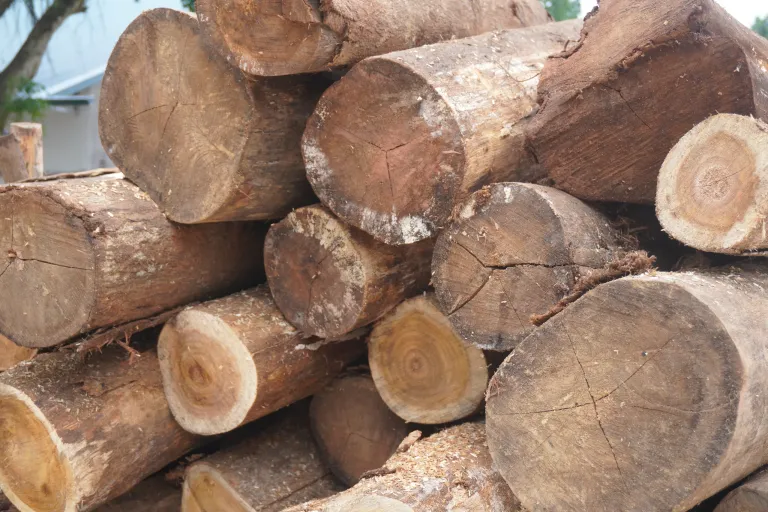
Moisture content (MC) is the weight of water in a piece of wood, shown as a percentage of the weight of the same wood when fully dry. Freshly sawn wood can hold as much water as its own dry weight or more, which is why timber is dried before it is made into furniture, flooring or panels.
The reference method is to weigh a sample, dry it in an oven and weigh it again. In daily production, factories use moisture meters, which give a quick reading through pins pushed into the wood or through a flat sensor pressed on the surface. A meter needs the correct setting for the species and several readings per lot, because moisture is not always even across a board or a stack.
Why the target depends on the destination
Wood keeps exchanging moisture with the air until it reaches a balance, called the equilibrium moisture content, which depends on the relative humidity and temperature of the place where it ends up. A heated home in a dry winter holds wood at a lower level than a humid coastal climate, so a single number does not suit every market.
For our export wood products we kiln-dry to your market target: 8–12% for the EU and US and 10–14% for Japan. If the target is set too high for the destination, the wood dries further after delivery and shrinks; if it is set too low, the wood takes up moisture and swells.
What goes wrong when moisture is off
| Stage | Wood that is too wet | Wood that is too dry |
|---|---|---|
| During the voyage | Risk of mould and staining in the container | Usually none, but poor packing lets it pick up water |
| After delivery | Shrinkage: cracks, open joints, gaps in finger-jointed and edge-glued panels | Swelling and cupping in humid conditions; tight fits and sticking parts |
| In production | Glue lines and finishes under stress | Brittle edges and splitting when machining and assembling |
The aim is the right level for the market, not the lowest level. Over-drying adds cost and brings its own problems.
How kiln drying controls moisture
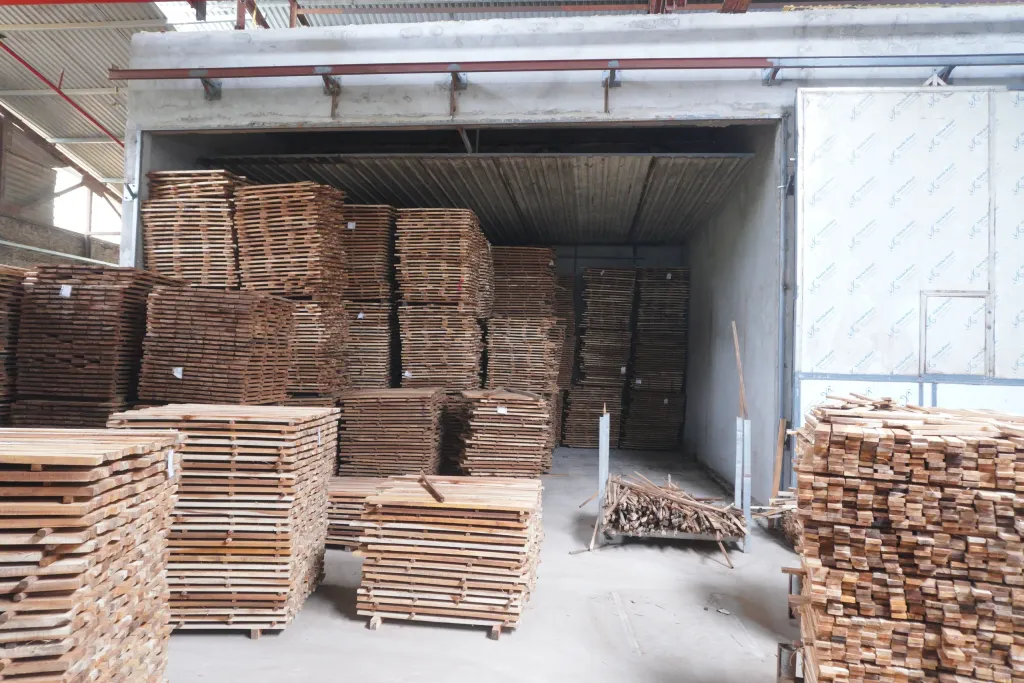
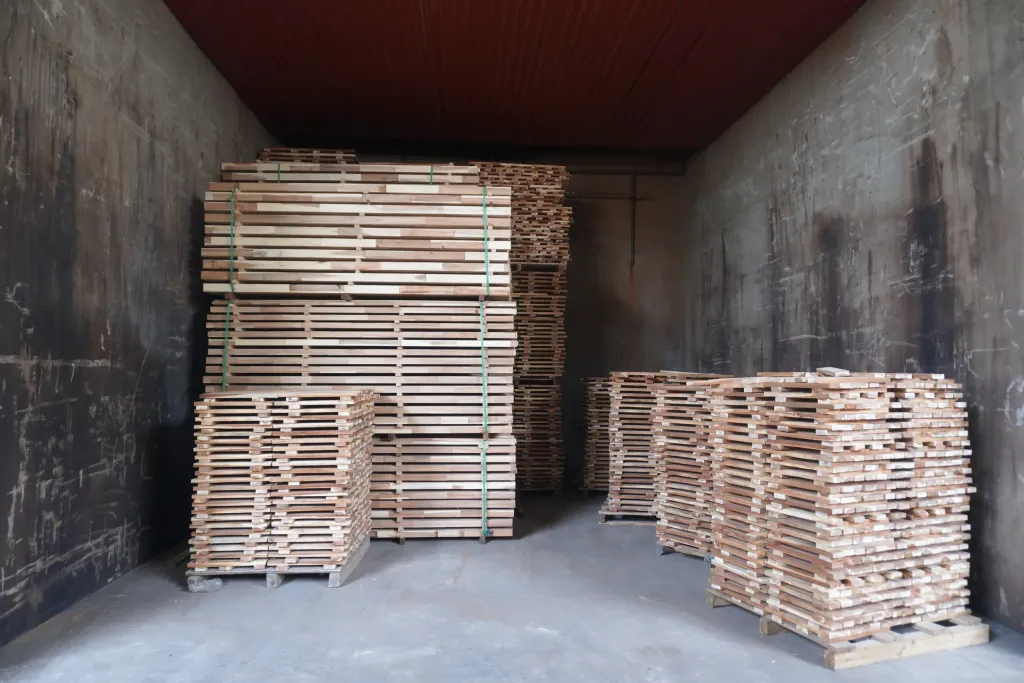
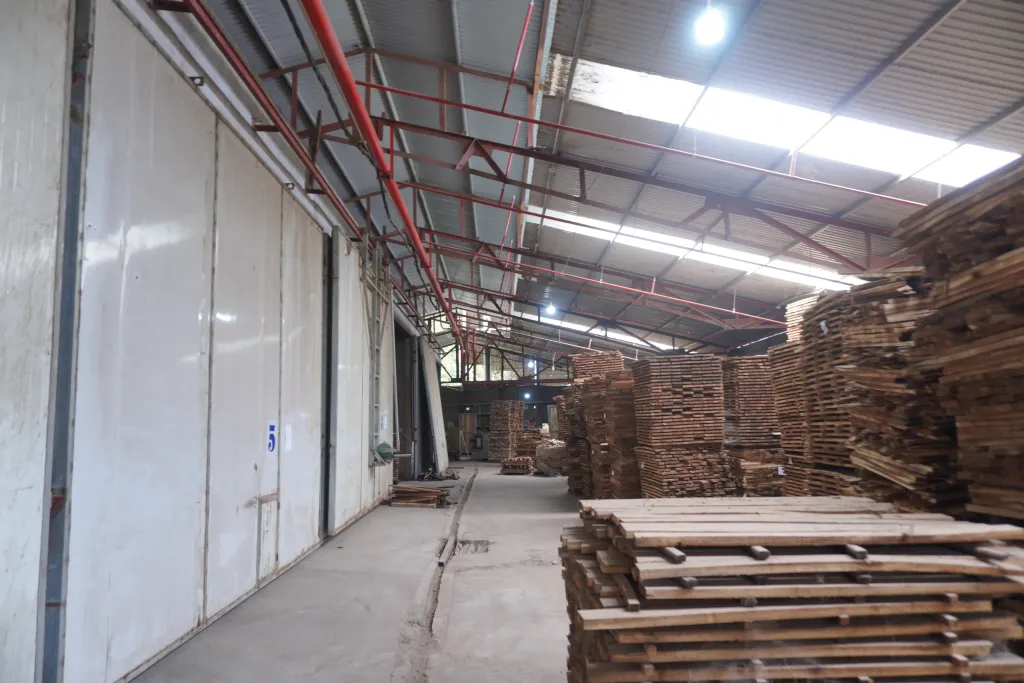
In a drying kiln, timber is stacked with thin spacers (stickers) between the layers so that air can move through every layer. The chamber follows a schedule of temperature and humidity that removes water gradually: drying too fast dries the surface before the core and causes checks and stress. After the main drying, a conditioning step lets the moisture even out between the surface and the core and from board to board.
Air-drying outdoors is sometimes used as a first step, but it usually cannot reach the low, even levels that furniture needs, and kilns can. THH Furniture runs 10 moisture-controlled drying kilns.
How moisture is checked on the way to the container
Moisture should be checked at several points, not only once.
- After the kiln: samples from each load confirm that the drying target was reached.
- Before gluing and machining: strips that are glued together should be at a similar level, otherwise the glue line is under stress as they equalise.
- Before packing: a final inspection before packing, to the level agreed for your order, is the right moment to agree a moisture check on a sample of the lot.
Photos of the inspection area and records of the readings are a fair request for any order. Our quality control page describes how inspection fits into production.
What to write in your purchase order
A clear moisture clause prevents arguments later. Include five things.
- The target range for your market, for example 8–12% for the EU and US or 10–14% for Japan.
- The measuring method: which type of meter, with the correct species setting, and the oven-dry method as the reference in a dispute.
- The sampling plan: how many pieces per lot or per pallet are measured and where on the piece.
- The acceptance rule: what happens when a lot is out of range, such as re-drying, replacement or a price adjustment.
- The moment of inspection: at the factory before packing, by your own inspector or a third party, and the documents you want to receive.
If you do not know the right target for your product and climate, tell the supplier the destination and the use, and ask for a proposed range in writing.
Protecting the goods in the container
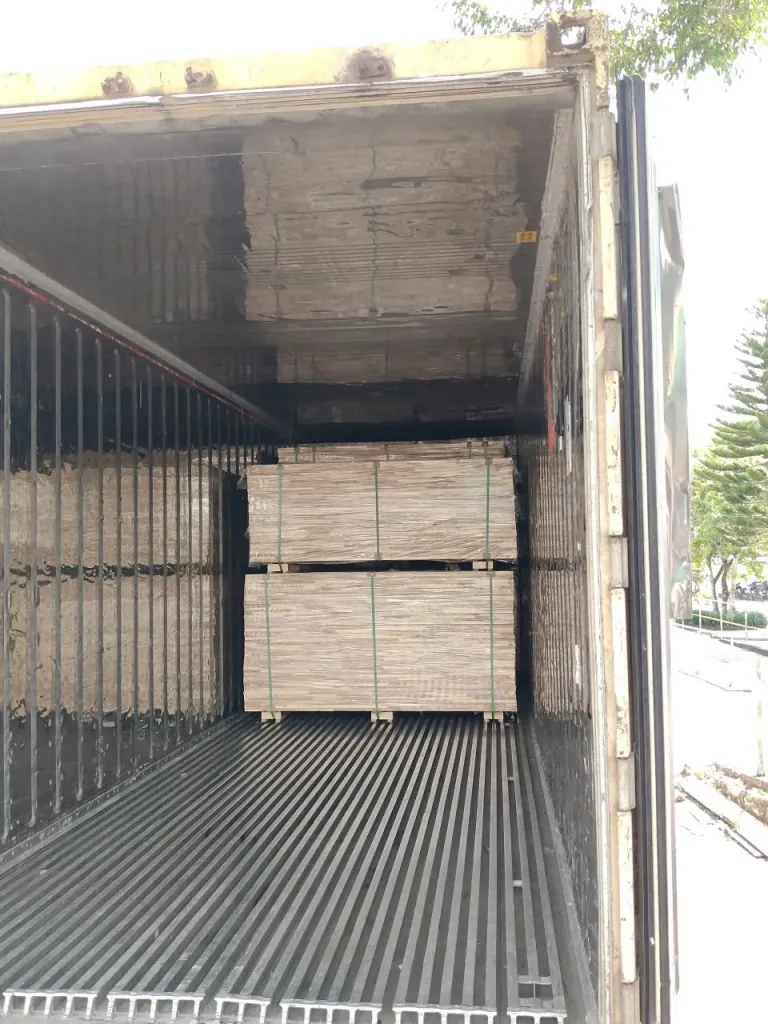
Even correctly dried wood can take up moisture on the way. During a long sea voyage, temperature swings can make moist air condense on the inside of a steel container (often called container rain) and on cold surfaces. Good practice is to load dry goods into a dry container, never to load in the rain, to wrap pallets and cartons so moisture cannot reach the wood, and to ask your freight forwarder about container ventilation or desiccant options for long routes.
Our export packaging and container loading guide shows how we pack and load, and how the export documents fit together.
When the goods arrive
Take moisture readings on receipt from several cartons or pallets and keep them with photos. When the climate at destination is very different from the one the goods travelled through, let furniture and wood products settle in the conditions where they will be used before assembly or installation. If a reading is outside the agreed range, report it promptly with the readings, the meter type and the photos.
How THH Furniture handles moisture
We dry in 10 moisture-controlled kilns and kiln-dry to your market target: 8–12% for the EU and US and 10–14% for Japan. A final inspection before packing is carried out to the level agreed for your order, and the moisture clause belongs in that agreement. See the materials and finishes page, the solid acacia panels and deck tiles where moisture matters most, and request a quote with your destination and target range.
Frequently asked questions
What moisture content should exported furniture wood be?
It depends on the destination climate and on how the product is used. For our export wood products we kiln-dry to your market target: 8–12% for the EU and US and 10–14% for Japan.
Can wood be too dry for export?
Yes. Wood that is drier than the destination air takes up moisture and swells, and very dry wood is more brittle during machining. The aim is the right level for the market, not the lowest possible level.
How is the moisture content of wood measured?
The reference method weighs a sample before and after oven drying. In production, pin or pinless moisture meters give quick readings; they need the right species setting and several readings per lot.
Does kiln drying replace fumigation or heat treatment certificates?
No. Drying to a moisture target and phytosanitary treatment are separate requirements. Ask which certificate your country requires; our export packaging guide lists the documents that usually travel with a shipment.
What should I do if the moisture reading is out of range on arrival?
Record several readings with the meter type and photos, and report to the supplier promptly under the clause in your purchase order. Agree the remedy, such as re-drying, replacement or a price adjustment, in the order terms beforehand.