Knowing how to choose a furniture manufacturer in Vietnam saves more money than any negotiation on price. Vietnam has a large wood-processing industry, from small workshops to export plants, and on a website the factories can all look alike. This checklist gives importers twelve checks, for each one what to ask, how to verify the answer yourself and, where we can, how THH Furniture answers it. Use it on every supplier on your shortlist, including us.
The 12-point checklist
1. Confirm the legal entity
Why it matters: you are contracting with a company, not a website. The name on the quotation, the invoice and the bank account must match one registered company.
Ask for the business registration certificate, tax code, registered address and the name of the legal representative. Verify the tax code in the National Business Registration Portal and check that the bank details carry the same company name.
THH Furniture: THH Furniture Vietnam Joint Stock Company, tax code 0111088024, head office at 302 Phu Vien Street, Bo De Ward, Hanoi.
2. Confirm the factory is theirs
Why it matters: trading companies and agents are legitimate, but you need to know who actually makes your order, because quality, lead time and audit results belong to the factory.
Ask for the factory address, recent photos and video of production, the machine list and which steps are outsourced. Verify with a live video walk-through, a visit or a third-party factory audit.
THH Furniture: factories in Tuyen Quang and Hanoi; factory visits can be arranged.

3. Match capacity to your volume
Why it matters: a factory that is full, or too small for your programme, misses ship dates or subcontracts without telling you.
Ask for monthly capacity per product line, the current order book for your season and the lead time in peak months. Verify by asking for photos of lines running your product type and comparing the stated capacity with the size of the site and the workforce.
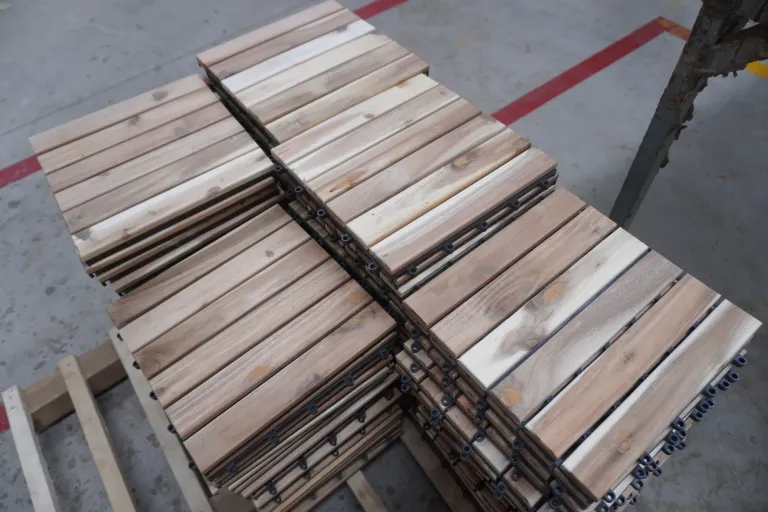
THH Furniture: 35,000 m³ annual production capacity; up to 30 containers of decking tiles per month; around 1,000 m³ of finger-jointed boards per month; 20,000 m² of covered production space across our Tuyen Quang and Hanoi factories.
4. Trace the raw material
Why it matters: species, origin and legality drive quality and your own compliance. “Made in Vietnam” does not mean the wood grew there.
Ask which species, from which source, plantation or natural forest, and how the legality of each purchase is documented. Verify with supplier documents for wood purchases and, for certified wood, the certificate code (check 5).
THH Furniture: acacia from our own plantations, with no natural forest harvesting; 10,000 ha of company-owned acacia plantations in Northern Vietnam. See responsible sourcing.
5. Check certificates in the database, not on the PDF
Why it matters: a certificate copy can be out of date or cover different products from the ones you are buying.
Ask for the FSC Chain of Custody code and the social audit report. Verify the FSC code in the public certificate database for status, validity and scope (products and species); see FSC 100% vs FSC Mix vs FSC Recycled. For an amfori BSCI audit, check the monitoring ID, the overall rating and the validity date, and remember that BSCI is an audit, not a certificate, and a report can list open findings.
THH Furniture: FSC® Chain of Custody SA-COC-016121 (licence FSC-C226314), FSC 100% Acacia mangium and hybrid, valid 09 March 2026 to 08 March 2031; amfori BSCI audited site, overall rating B, monitoring ID 26-0399452, valid to 28 May 2028; the full report is available on request. See the FSC certificate page.
6. Ask how moisture is controlled
Why it matters: moisture decides whether furniture and panels crack or warp after arrival.
Ask how many kilns the factory has, what moisture target it uses for your market, how it measures and whether it keeps records. Verify with a meter reading on your own sample. Our guide on moisture content for exported wood furniture shows what to write into the order.
THH Furniture: 10 moisture-controlled drying kilns; kiln-dried to your market target, 8–12% for the EU and US and 10–14% for Japan.
7. Look at quality control in the building
Why it matters: quality control is a set of checks at several points, not one inspection at the end.
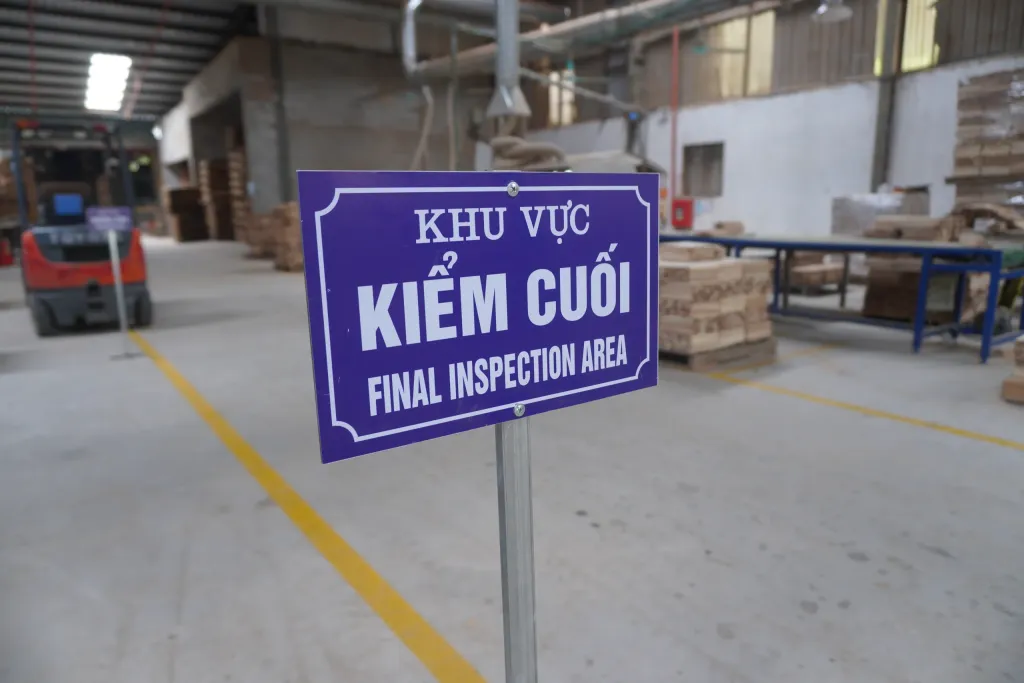
Ask what is checked on incoming material, during production and at final inspection, who does it, how defects are recorded and which acceptance level applies. Verify by asking to see the final inspection area and sample reports, and by allowing for a third-party inspector at loading.
THH Furniture: inspection before packing, to the level agreed for your order. See quality control.
8. Run a proper sample approval
Why it matters: the approved sample is the contract for appearance, finish and dimensions.
Ask about sample lead time and cost, a pre-production sample and a retained reference sample. Verify by measuring the sample against your drawing and keeping a signed, sealed reference piece for comparison with the shipment.
THH Furniture: minimum order quantity and sample terms are confirmed with your quotation.
9. Clarify OEM/ODM and intellectual property
Why it matters: your drawings, tooling and packaging artwork are assets that can leave with a careless supplier.
Ask for a non-disclosure agreement, who owns tooling and moulds, and what the factory can change for your brand. Verify the answers in the contract, not only in the email.
THH Furniture: OEM/ODM covers dimensions, finish, colour, hardware, packaging and private label. See our OEM/ODM capabilities and the OEM and ODM process guide.
10. Review packing and loading
Why it matters: damage in handling and at sea is expensive, and packaging is part of the price.
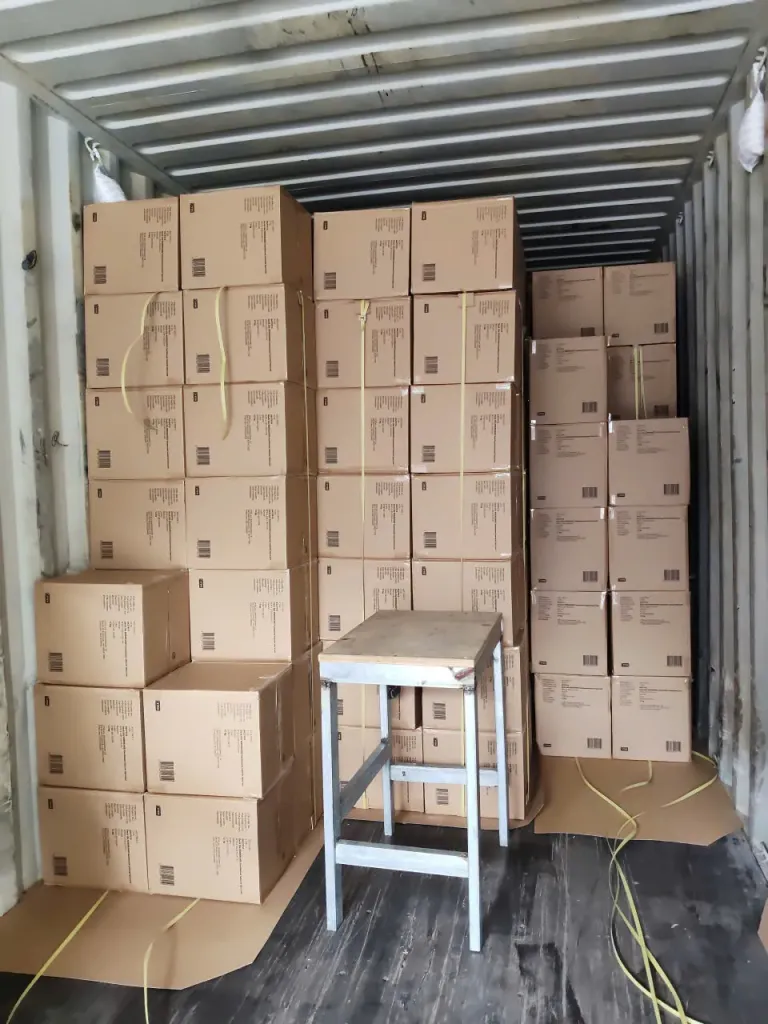
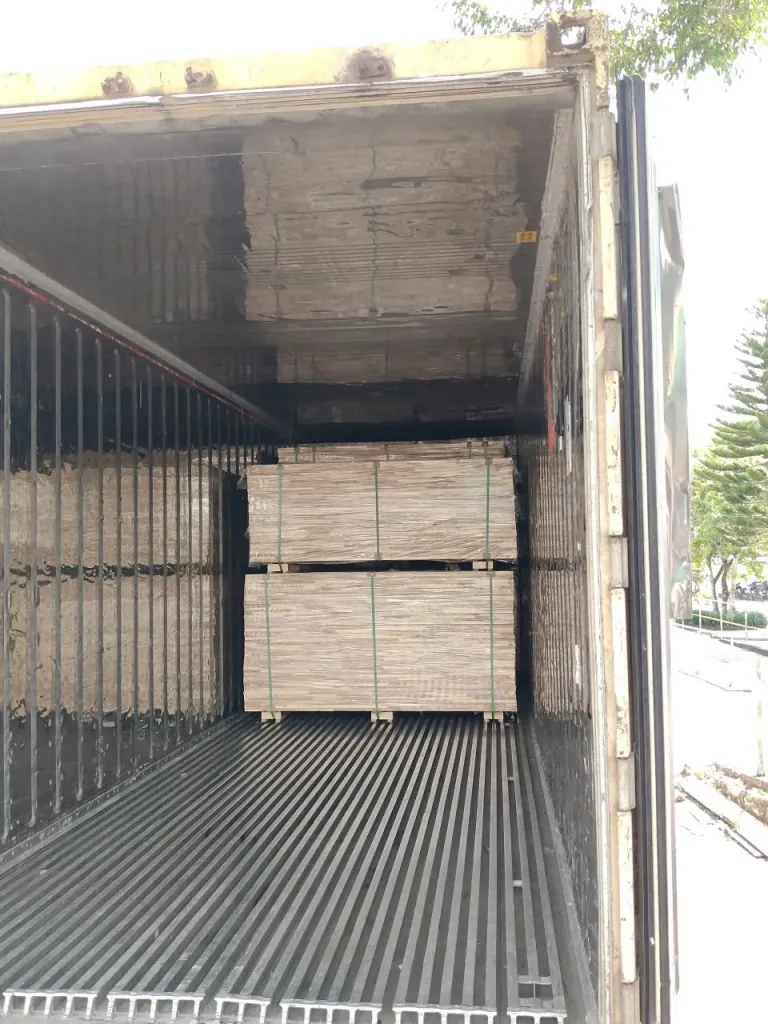
Ask for the carton specification, drop-test practice, pallet type and how containers are loaded and photographed. Verify with photos before, during and after loading, or with an inspector at loading.
THH Furniture: ISPM-15 treated export pallets are available; agree the loading photos you want in the order terms. See the export packaging and container loading guide.
11. Agree documents and terms in writing
Why it matters: a missing document can hold goods at customs for days.
Ask which documents come with each shipment: commercial invoice, packing list, bill of lading, a certificate of origin if you claim preferential duty, a fumigation or phytosanitary certificate and, for certified wood, the FSC claim on the invoice. Agree the trade term (for example FOB or CIF) and the payment terms in writing, and avoid paying the full amount in advance on a first order. Verify by asking for a sample set of documents from a previous shipment with names hidden.
THH Furniture: when you order FSC, the claim is stated on the invoice and shipping documents.
12. Test communication and track record
Why it matters: the first weeks of quotation show how problems will be handled later.
Ask who your contact is, how fast they reply, whether they can read technical drawings in English and for references from buyers in your market. Verify by timing the replies and calling one reference.
THH Furniture: we reply within 24 hours, Monday to Friday (GMT+7). Selected customers include IKEA, Costco and Trade Point A/S in Denmark.
Red flags
- The supplier will not give a factory address or refuses a live video walk-through.
- Prices are far below every other quotation and nobody can explain why.
- Factory photos look like stock images, or change from one message to the next.
- A certificate code does not match the database, or the scope does not cover your product.
- Answers about the origin of the wood are vague.
- There is no sample process, or pressure to pay a large deposit before any sample is approved.
How to shortlist, sample and visit
- Send the same request to five to eight suppliers with the drawing, volume and destination, and compare the answers to this checklist.
- Shortlist two or three on the quality of the answers, not only on price.
- Order paid samples and measure them against the drawing.
- Visit the factory or book a third-party audit before the first large order.
- Start with a trial order before committing a full programme.
Our step-by-step guide to importing furniture from Vietnam covers what happens after you choose.
About THH Furniture
THH Furniture is a manufacturer with its own factories and its own acacia plantations. We make acacia outdoor furniture, deck tiles and solid wood panels for importers in Europe, the United States, Asia and Australia. Send us your drawing, volume and destination and we will answer this checklist for your product: request a quote.
Frequently asked questions
How many suppliers should I shortlist?
Send your request to five to eight suppliers and shortlist two or three. More than three finalists usually slows decisions without improving the result.
Do I need to visit the factory before ordering?
For a first large order, a visit or a third-party audit is worth the cost. If you cannot travel, a live video walk-through of your product line plus an independent inspection at loading is the next best option.
What is the difference between a manufacturer and a trading company?
A manufacturer makes the product in its own factory. A trading company buys from factories and resells. Both can be legitimate, but the factory owns quality, lead time and audit results, so ask which one you are dealing with.
Is it safe to pay a deposit to a factory in Vietnam?
Agree the payment terms in writing, keep the deposit modest on a first order, pay only to an account in the registered company’s name and tie the balance to inspection and shipping documents. Your bank can advise on safer instruments such as a letter of credit.
How do I check a Vietnamese company’s registration?
Ask for the tax code and business registration certificate, then look the company up in the National Business Registration Portal. Check that the name, the address and the legal representative match the quotation and the bank details.