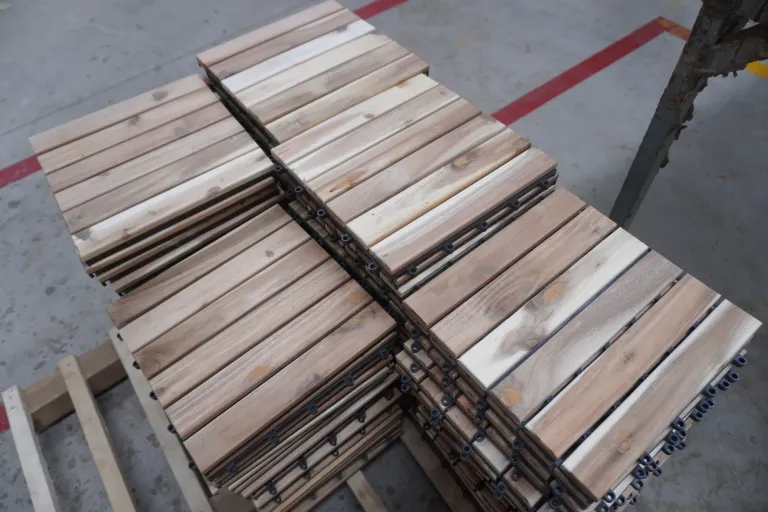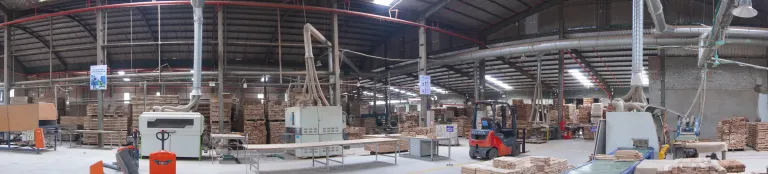
If you are planning to import furniture from Vietnam, the process is straightforward once you know the steps. This guide follows a buyer’s path from the first drawing to goods on your warehouse floor: defining the specification, shortlisting factories, requesting quotations and samples, agreeing terms, controlling quality, shipping and customs. It is written from the supplier’s side of the table, so it also shows what a good factory should be ready to provide at each step.
Step 1: define your product and target
Before you contact factories, write a short brief. The more precise it is, the faster you will receive comparable quotations.
- A drawing or reference photo, with dimensions, materials, finish and colour.
- Target volume per year and per order, and your target market.
- Packaging requirements: carton or pallet, labels, barcodes and private label artwork.
- Any rules your market applies to wood products or furniture. Ask your customs broker what documents you will need.
- Target price and delivery window.
Step 2: shortlist furniture suppliers in Vietnam
Furniture sourcing in Vietnam starts with a shortlist of three to five factories that make products like yours. Check these points for each one.
- Manufacturer or trading company? Ask who owns the factory, where your goods will be made and whether any steps are subcontracted.
- Legal identity: company name, registration and tax code should match the documents and the website.
- Certificates: for wood products, ask for FSC Chain of Custody details and verify the certificate code in the FSC public certificate search. Ask for social audit results such as amfori BSCI if your customers require them.
- Capacity and focus: confirm that the factory normally makes products in your category and volume.
- Evidence: photos and video of real production, not stock images, and references where permitted.
Step 3: request a quotation and approve samples
Send your brief to your shortlist as a request for quotation (RFQ) and compare the answers on the same basis: price, material, finish, packing, minimum order quantity and lead time. A good supplier will ask questions; silence on details usually means surprises later.
Then approve a confirmation sample, ideally built on the production line rather than in a separate workshop. Keep the approved sample: it is your reference for every shipment. Sample terms, MOQ and lead time depend on the product, so ask for them in writing with the quotation.
Step 4: agree price, payment terms and Incoterms
Agree the commercial terms before production starts.
- Price basis and Incoterms: for example FOB, CIF, CFR, EXW or DAP. FOB (free on board) means the supplier delivers the goods on board the vessel at the port of loading and you take over cost and risk from there. Northern Vietnamese factories commonly ship through the Hai Phong area ports.
- Payment terms: deposit and balance, and when the balance is due (for example against shipping documents).
- Specification schedule: dimensions, tolerances, materials, finish, packaging and labels, attached to the order.
- Quality standard: how defects are defined and what happens if a lot does not meet the specification.
Step 5: production and quality control
Good factories inspect at several points: incoming material, in process and before packing. Ask how the factory checks moisture content for wood products, how lots are identified (for example with batch codes) and whether you can arrange a third-party inspection before shipment. Pre-production approval of the final specification, packaging and labels prevents most disputes.
Step 6: shipping and export documents
Your freight forwarder books the container (or the supplier does, under CIF or CFR terms). Typical documents for furniture and wood products include:
| Document | What it is for |
|---|---|
| Commercial invoice | Value, terms and goods description for customs; an FSC claim is placed here when ordered |
| Packing list | Cartons, weights and volumes per shipment |
| Bill of lading | Transport contract and proof of shipment |
| Fumigation or phytosanitary certificate | Shows wood products or wood packaging were treated; ISPM-15 treated pallets are the usual standard |
| Certificate of origin | Needed if you claim a preferential duty rate under a trade agreement |
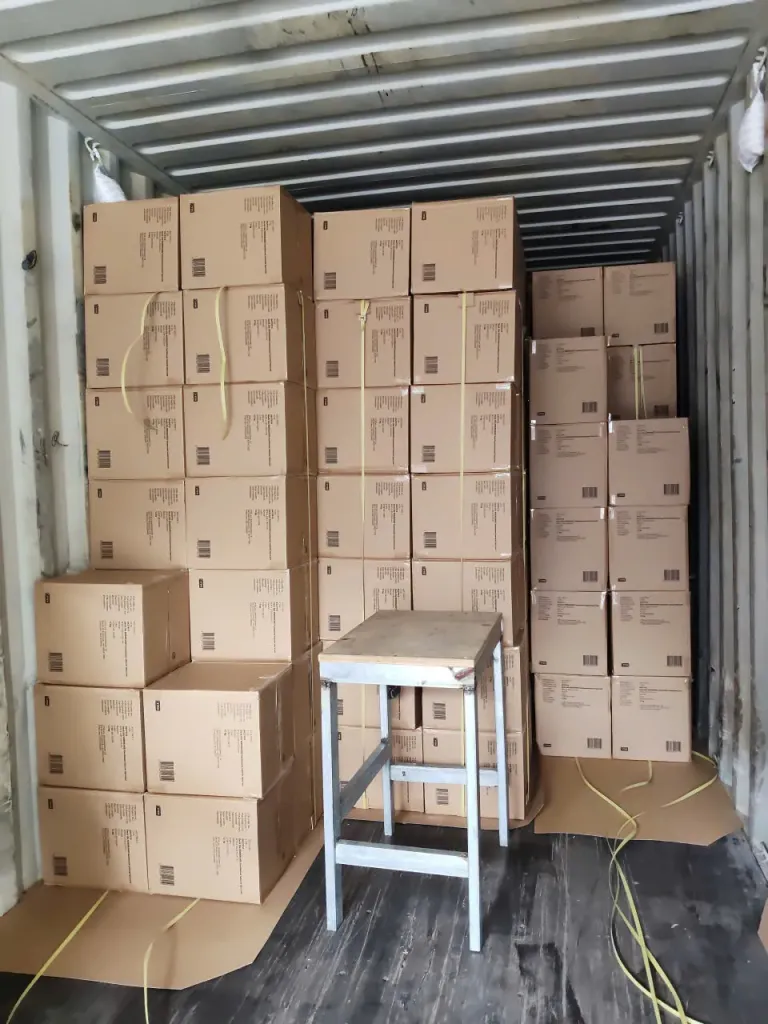
Our export packing and container loading guide explains how we pack, label and document shipments.
Step 7: customs clearance at destination
Your customs broker classifies the goods (HS code), calculates duty and taxes and checks any import rules for wood products in your country. Rates and requirements change, so confirm them before you confirm the price. Ask the broker whether a trade agreement between Vietnam and your country gives a lower duty for goods with a valid certificate of origin.
Step 8: receive, inspect and follow up
Inspect a sample of cartons on arrival against the approved sample and the packing list, and report any claim promptly with photos. Share the results with the factory so the next order improves.
How THH Furniture supports importers
THH Furniture is a manufacturer with its own factories in Tuyen Quang and Hanoi and its own acacia plantations. We make acacia outdoor furniture, deck tiles and solid wood panels for importers in Europe, the United States, Asia and Australia. You can verify our FSC Chain of Custody certificate online, and buyers are welcome to visit the factory before a first order. Send your brief through the quote form and we reply within 24 hours on working days; MOQ and sample terms are confirmed with your quotation.
Frequently asked questions
What is the minimum order quantity for furniture from Vietnam?
It depends on the product, finish and packaging, so ask each supplier for it in writing with the quotation. We confirm MOQ with every quotation.
How long does shipping from Vietnam take?
It depends on the route, the port and the season. Your freight forwarder will give you the schedule when the container is booked.
Do I need an import agent or sourcing agent?
Not necessarily. Buying direct from a manufacturer is common. Some buyers use an agent for supplier search and inspection, which adds a cost.
Which documents do I need to import wood furniture?
Typically the commercial invoice, packing list, bill of lading, a fumigation or phytosanitary certificate for wood products and, if you claim preferential duty, a certificate of origin. Your customs broker confirms the list for your country.
How do I check that a supplier is really FSC certified?
Ask for the certificate code and search it in the FSC public certificate database, then check that the scope covers the products you are buying.